Launch offer — valid today only

📄 Digital book in PDF · read it on your phone or print it

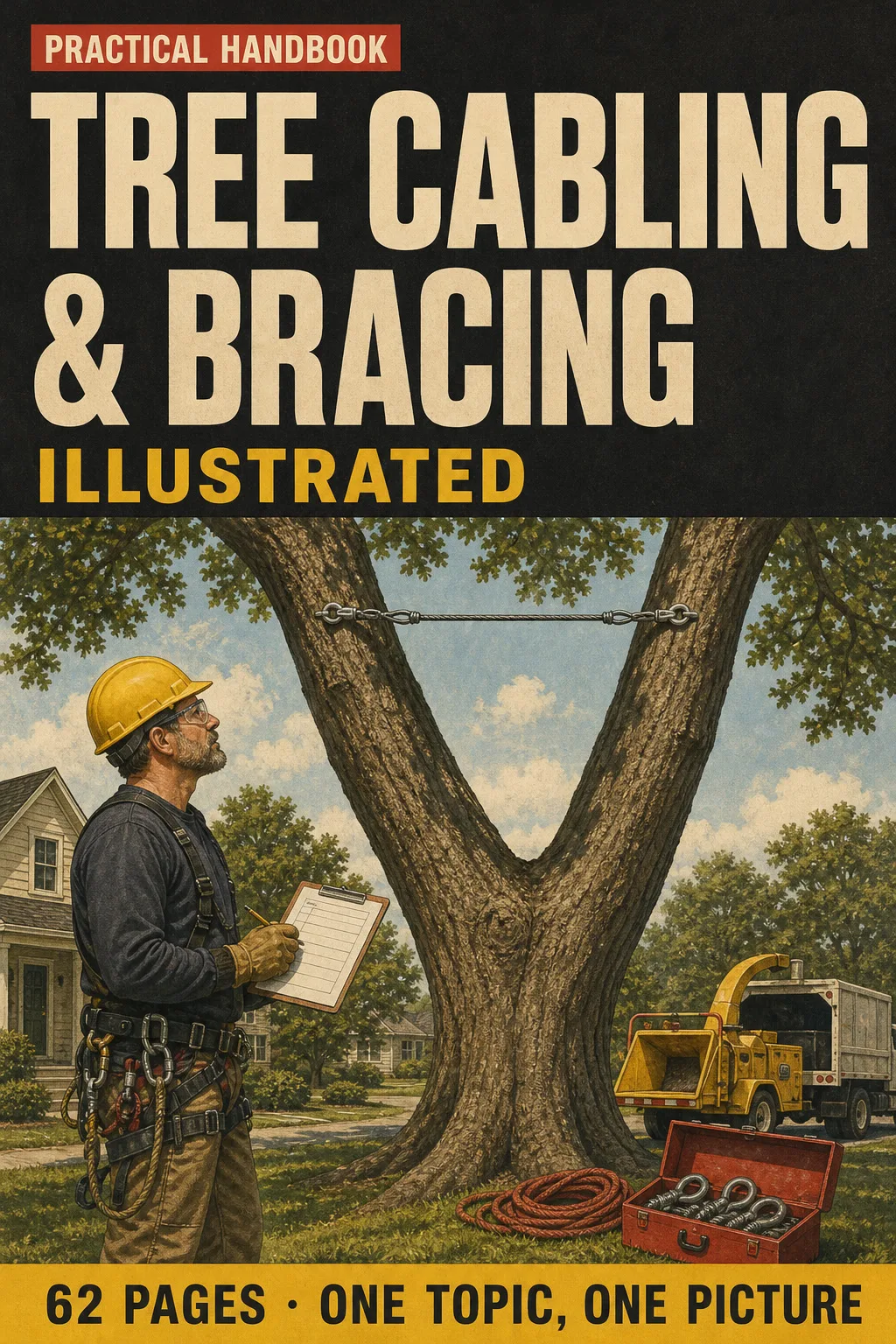
Tree Cabling and Bracing, Drawn Page by Page and Checked Against the US Standard Read the Union, Make the Call, Set the Cable: All Drawn

For tree crews who cable a few times a season: read the union, pick the system and install it the same way every time. 62 illustrated pages, one topic each: the drawing first, then the measurements and checks. PDF by email, ready to print for the truck. 62 illustrated pages.

GET THE 62 ILLUSTRATED PAGES

🔒 Secure checkout · PDF by email · 30-day guarantee

Every topic, its own pageEvery system and every piece of hardware drawn, with the explanation right beside it
62 illustrated pages8 parts, from why trees fail at the union to the 10-question self-check
Up-to-date sourcesANSI A300 (supplemental support systems), the matching best-practice guide and ANSI Z133
PDF by emailFormat

Look Inside the Book

Every page has one big drawing and a box with the measurements, steps and checks you need to know:

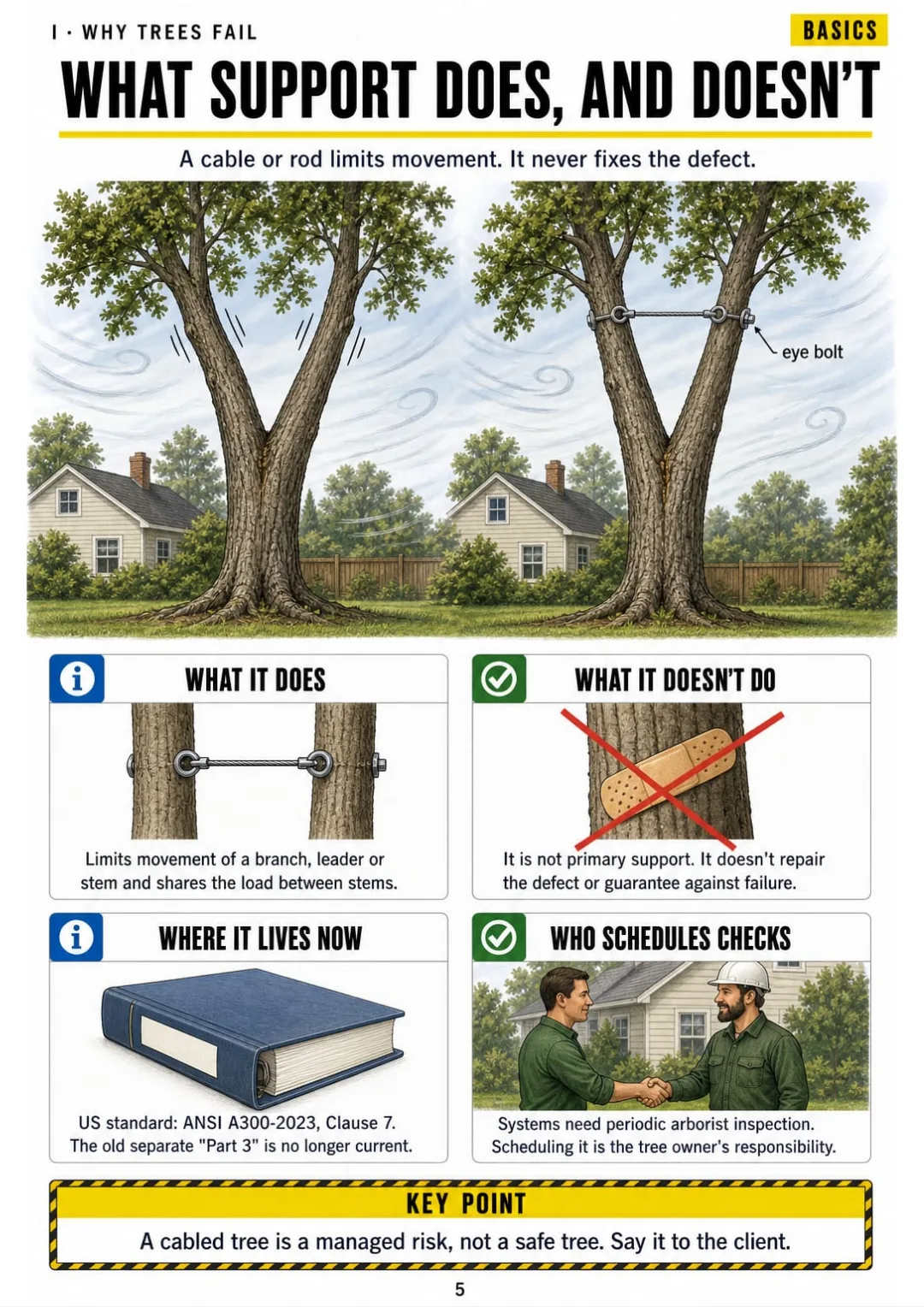
Support limits movement and shares load. It doesn't fix the defect or guarantee against failure.
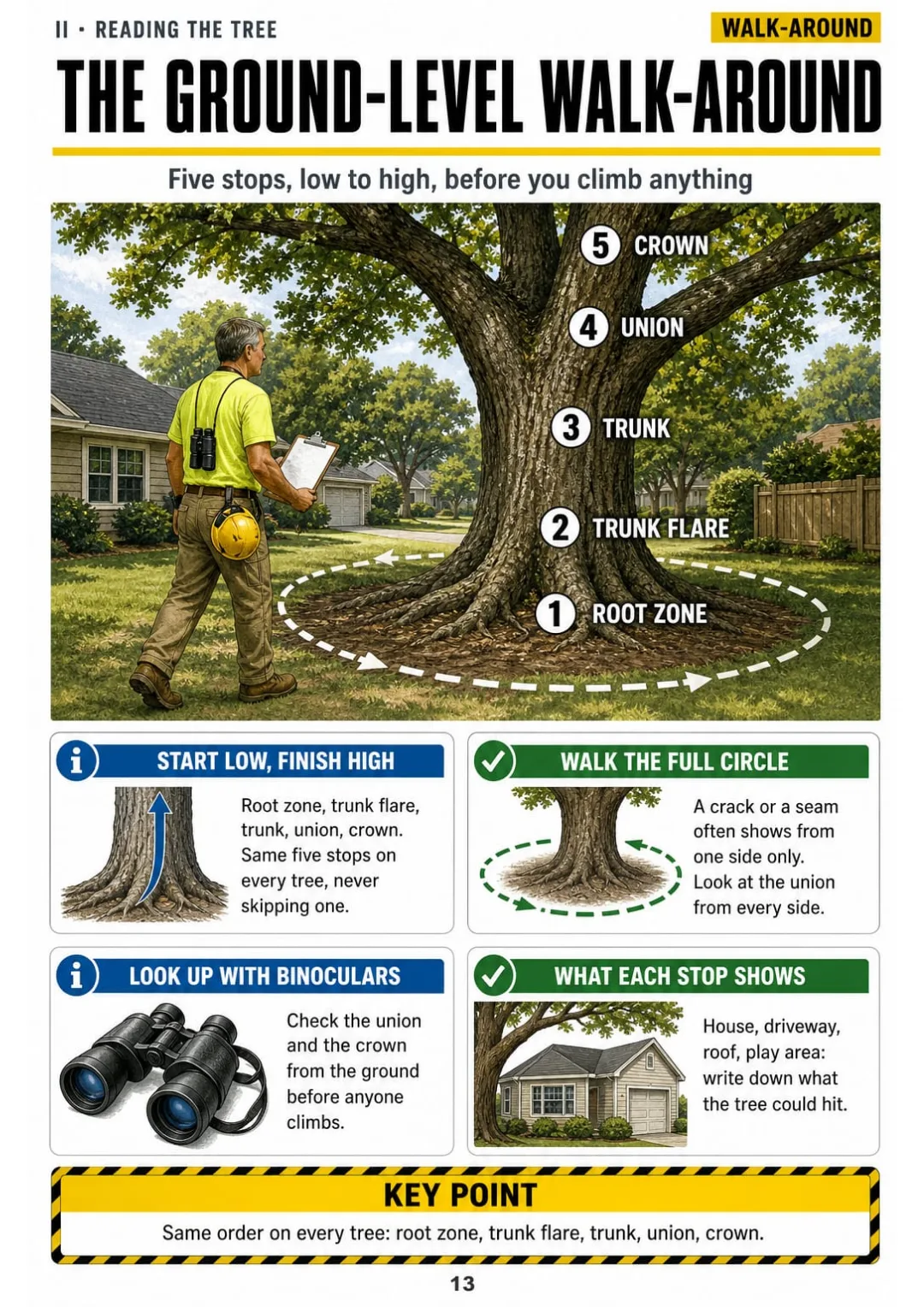
5 stops, always in this order: root zone, flare, trunk, union, crown
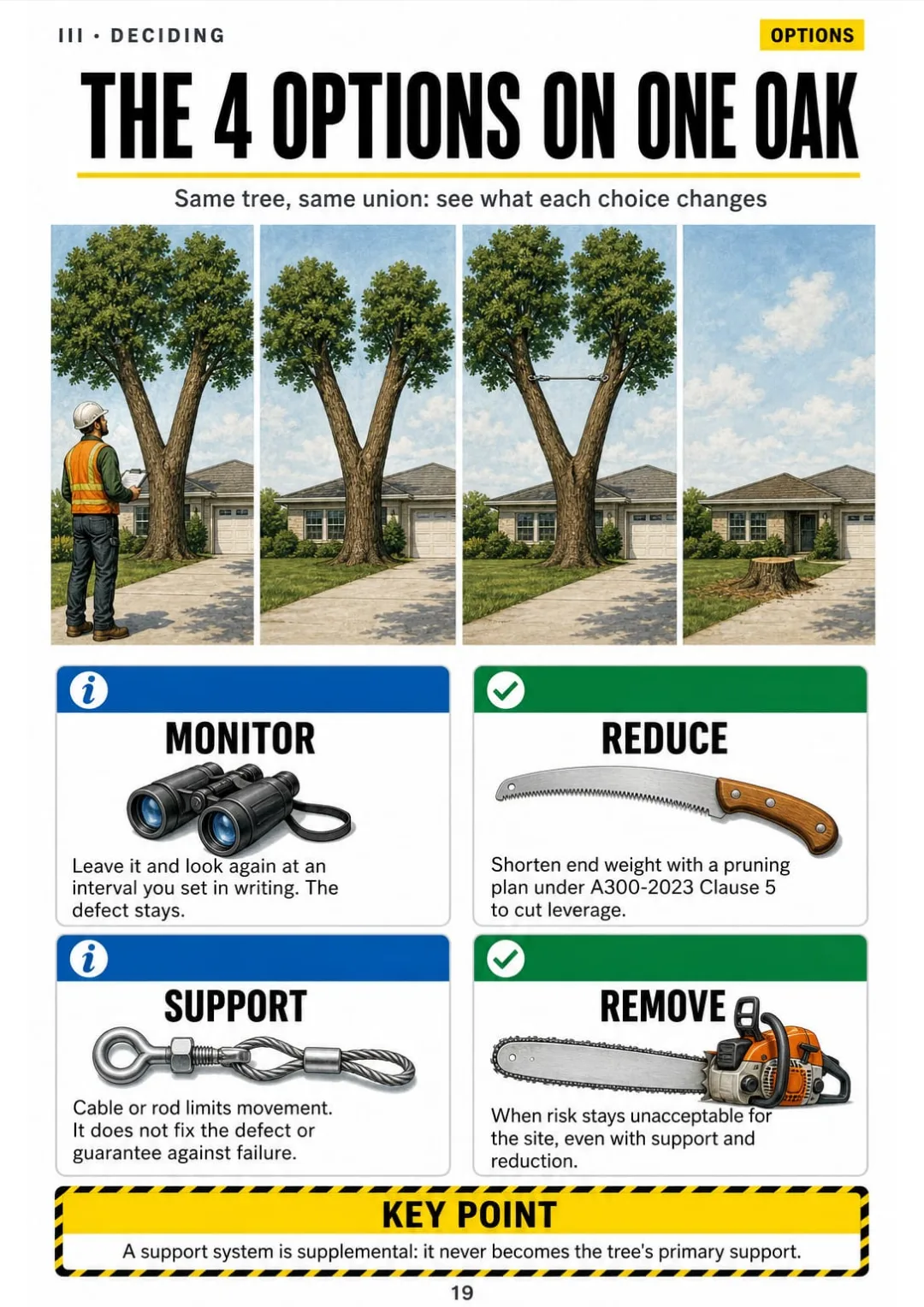
Monitor, reduce, support, remove: the same codominant oak drawn four ways.
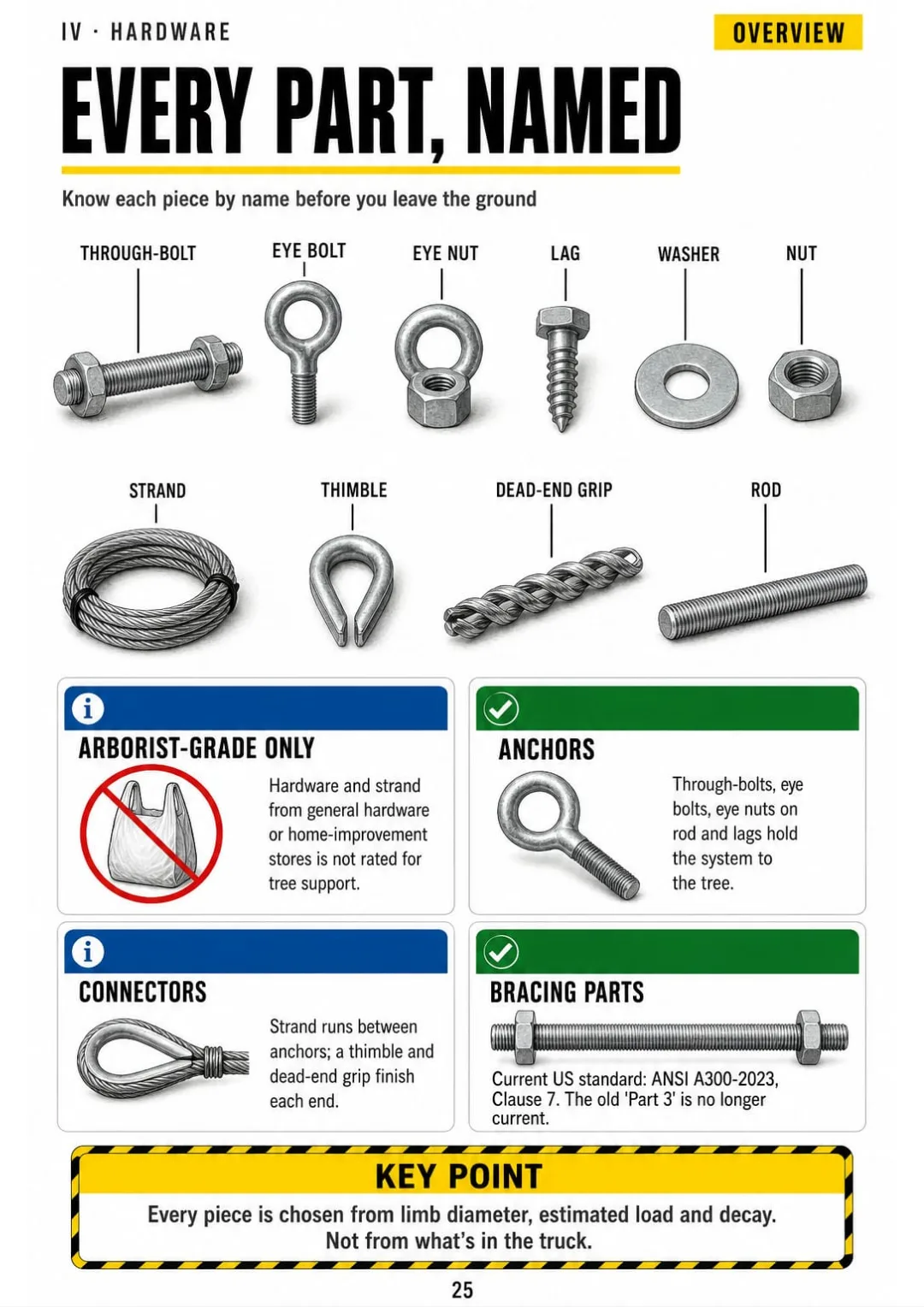
Through-bolt to dead-end grip: the 10 parts of a support system on one page
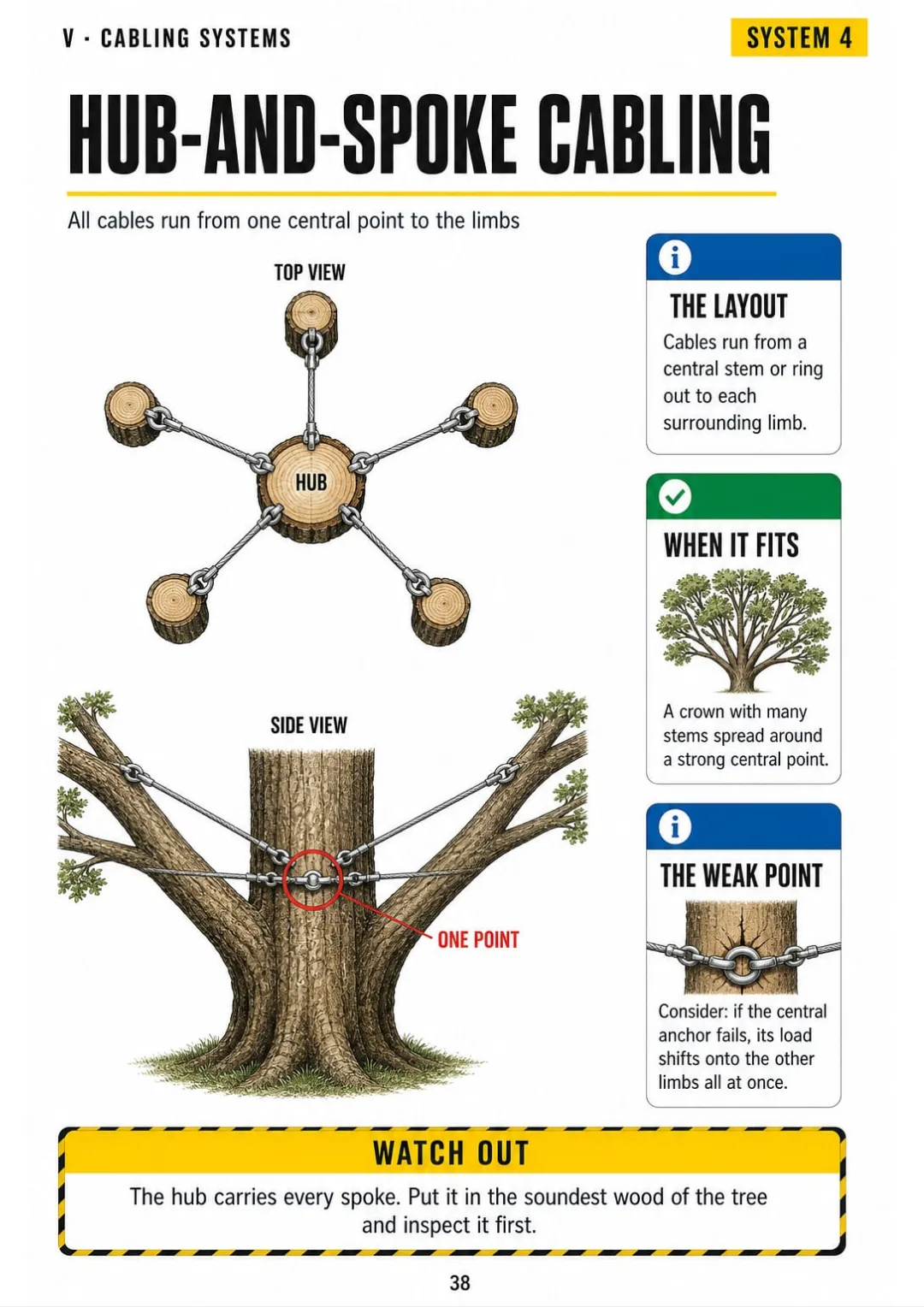
Hub-and-spoke cabling: cables from a central hub to each limb; the hub is a single point to check.
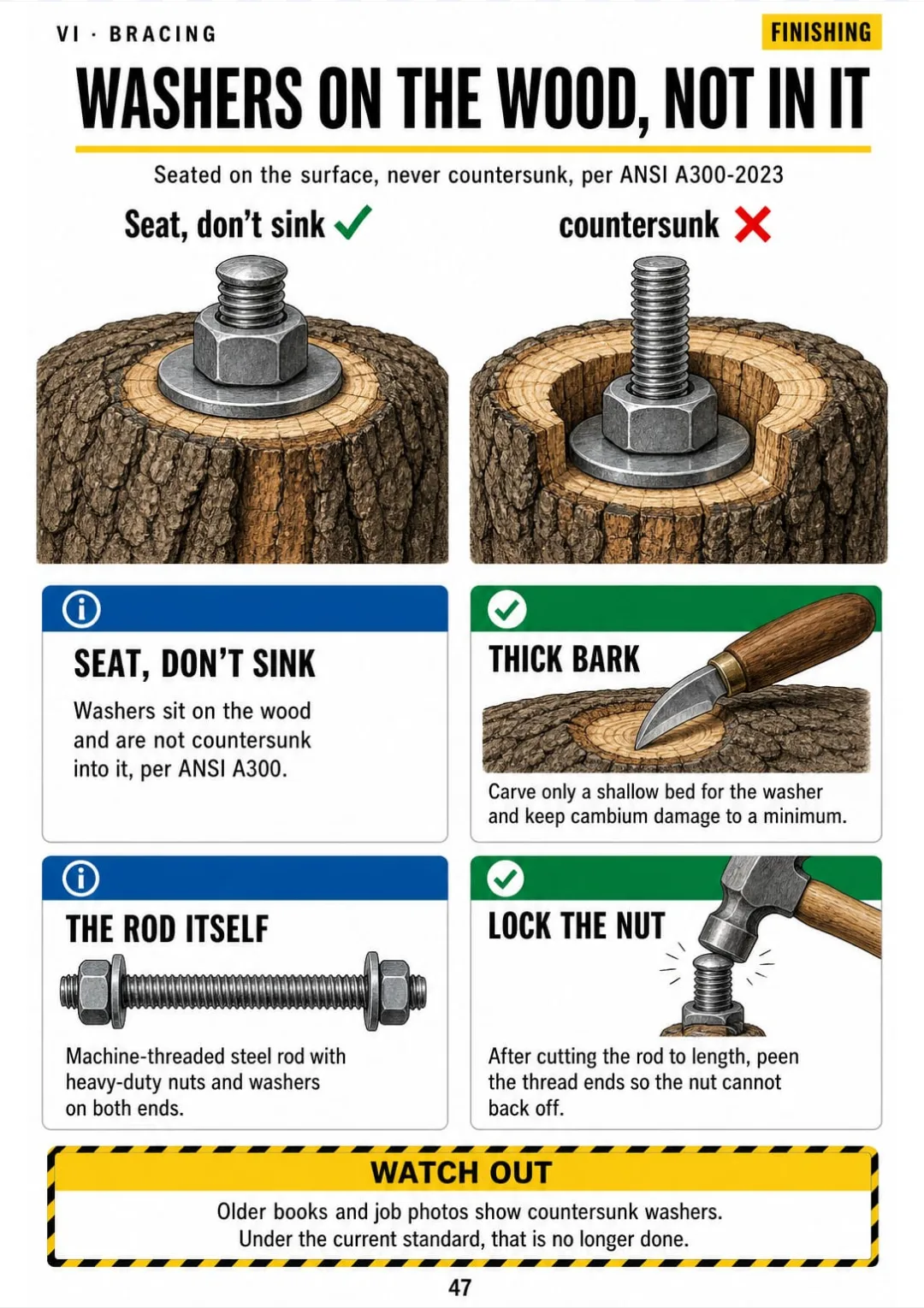
A300-2023, Section 7.6.13: washers are seated on the wood, never countersunk.
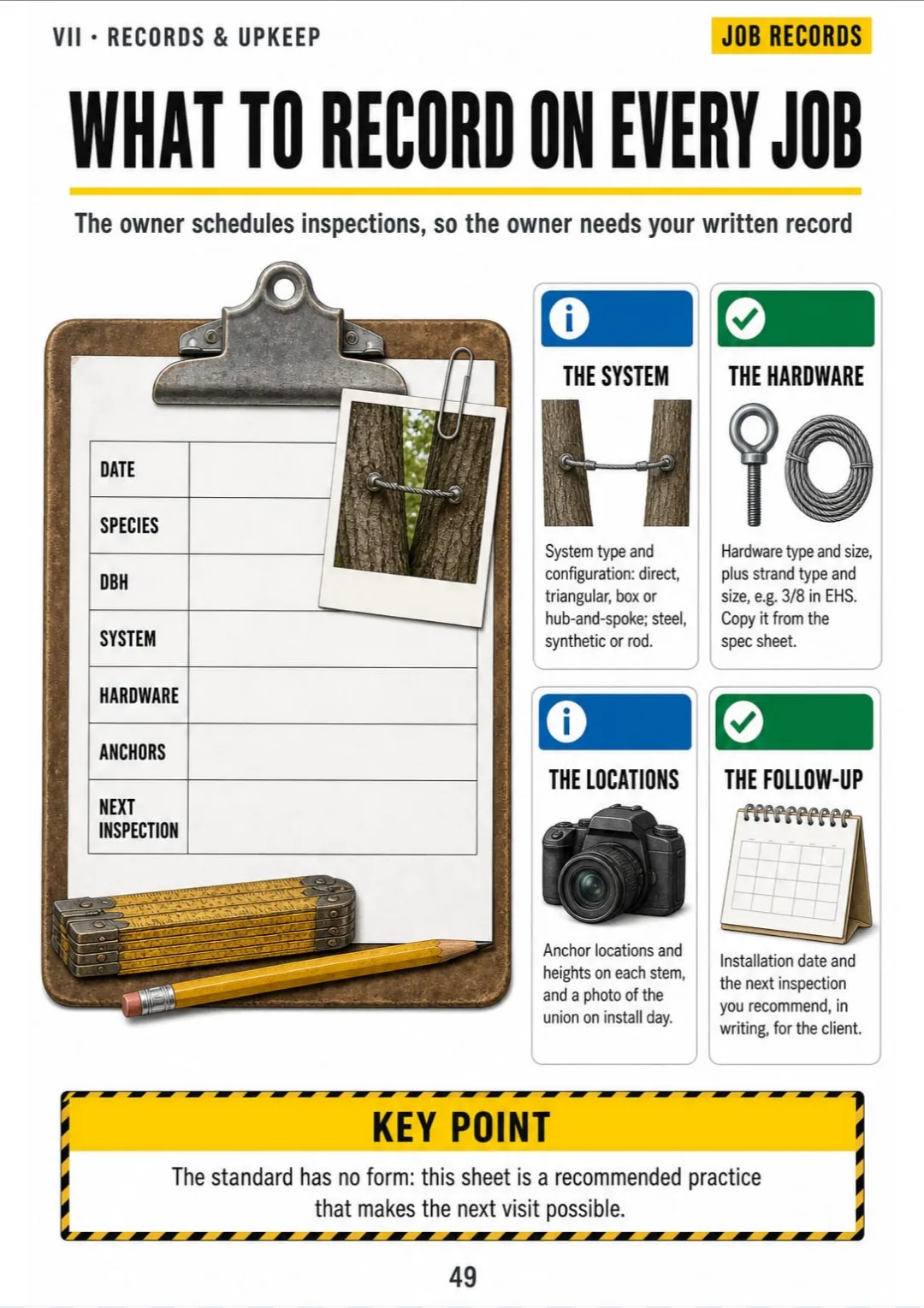
System, hardware and strand size, anchor locations, install date, next inspection: all on one sheet.
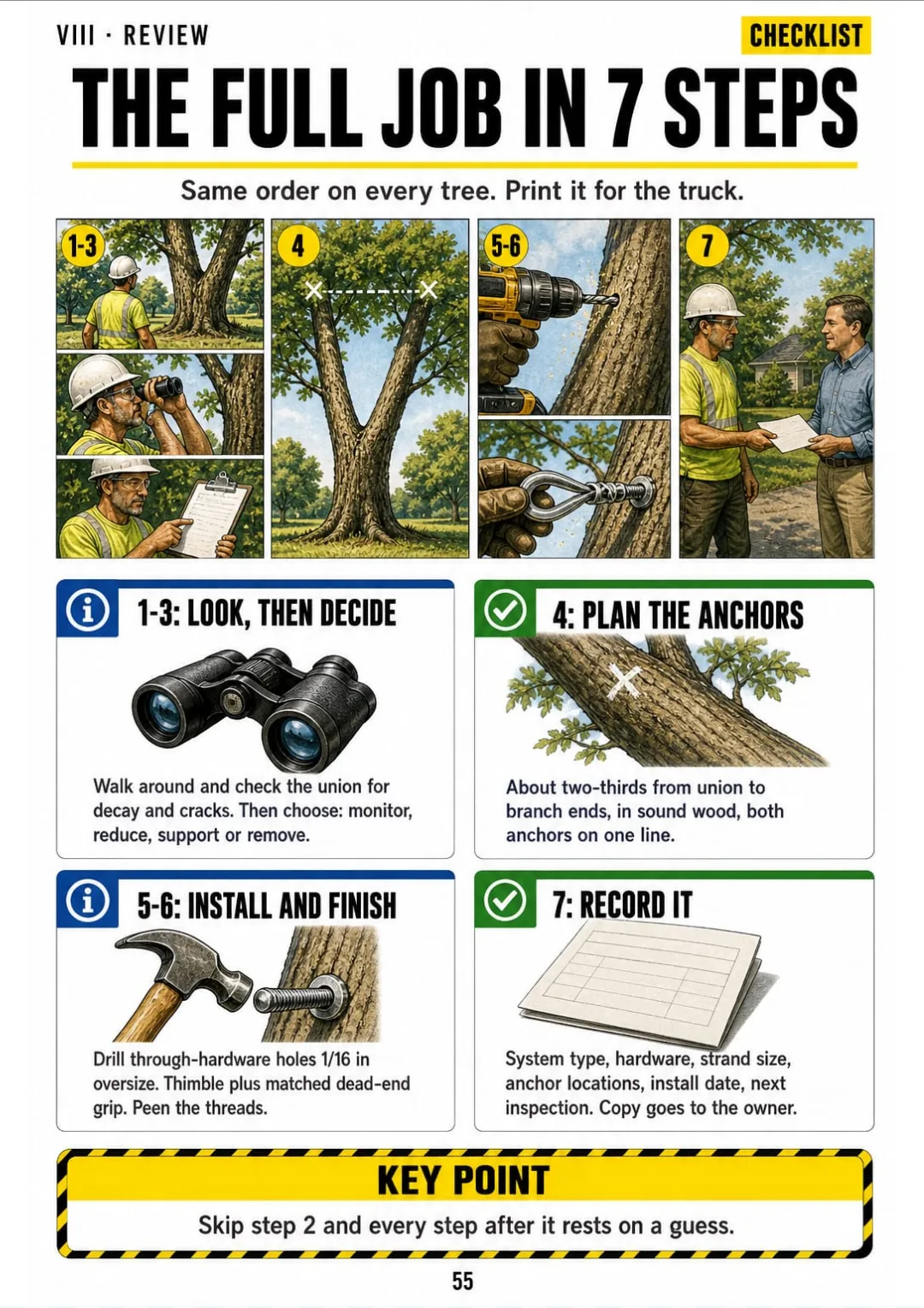
Walk, read, decide, plan, install, finish, record: the whole cabling job on one printable page.

Swipe to see more →

These are real pages from the book. The table of contents is the full one: 8 parts and 58 topics.

The Problem Isn't You. It's How It Was Explained to You.

You're standing under a codominant oak with a seam running down the union. The homeowner wants to know: cable it, cut it back or take it down?

You've read about it. But the standard and the guides lay out the options in paragraphs, one condition after another, and on site none of it adds up to an answer you can say out loud.

Monitor, reduce, support, remove: the same codominant oak drawn four ways.

In the book, that same oak is drawn four times on one page: monitor, reduce, support, remove. Side by side, with what tips the call toward each one.

The rest works the same way. The walk-around, the two-thirds rule, the 10 hardware parts, the cracked union with its brace rod, what to record: each one has its own page.

So you look at the tree, make the call and explain it to the client, without going back to the manual.

COMPARE FOR YOURSELF

Same Topic, Two Ways to Learn It

THIS
  • The manual: line after line
  • Walk-arounds explained only in words
  • You get to the tree still unsure
Prior to the selection of any supplemental support system, the arborist should conduct a visual assessment of the tree from ground level, giving due consideration to the condition of the root zone and surrounding soil, the presence or absence of a normal root flare, any evidence of trunk lean, cavities, cracks or fungal fruiting bodies, the architecture and attachment of codominant or multiple stems, and the overall density, balance and end weight of the crown, noting that observed conditions may interact and that all findings should be documented accordingly.
FOR THIS
  • The walk-around in one drawing
  • The 5 stops in a box, in order
  • You see it and you get it
5 stops, always in this order: root zone, flare, trunk, union, crown
CONTENTS

Take a Look at the 8 Parts and 58 Topics

Why trees fail at the union, reading the tree, deciding, hardware, cabling systems, bracing, records and inspection, and review: 62 pages, all illustrated

IWhy Trees Fail at the Union · pp. 5-12
  1. What a Support System Does (and Doesn't Do)
  2. Strong Union vs. Weak Union
  3. Codominant Stems
  4. Included Bark
  5. Cracks, Splits and Seams
  6. Decay at the Union
  7. How Load Acts on a Union
  8. Target and Consequence
IIReading the Tree Before You Decide · pp. 13-18
  1. The Ground-Level Walk-Around
  2. Reading the Union Up Close
  3. Species That Tend to Split
  4. Crown Shape and End Weight
  5. Sound Wood Where the Anchor Goes
  6. When Support Is Not Enough
IIIDeciding: Support, Reduce or Leave It · pp. 19-24
  1. The 4 Options
  2. The Decision Chart
  3. Reduction First, or Together
  4. Cable or Rod?
  5. Static vs. Dynamic Cable
  6. Talking It Through With the Client
IVHardware, Piece by Piece · pp. 25-32
  1. Hardware Overview
  2. Through-Hardware vs. Lag Hardware
  3. Eye Bolts and Eye Nuts
  4. Steel Strand Sizes
  5. Thimbles and Dead-End Grips
  6. Synthetic Dynamic Cable Kits
  7. Brace Rods
  8. Tools for the Job
VCabling Systems Step by Step · pp. 33-42
  1. The Two-Thirds Rule
  2. Aligning Anchors on One Line
  3. Direct Cabling
  4. Triangular Cabling
  5. Box Cabling
  6. Hub-and-Spoke Cabling
  7. Multiple Cables on One Tree
  8. Pulling Stems In Before You Tension
  9. Finishing the Cable
  10. Installing a Dynamic System
VIBracing Step by Step · pp. 43-48
  1. When to Use a Brace Rod
  2. Rod Placement Above the Union
  3. Single Rod vs. Multiple Rods
  4. Drilling a Clean Rod Hole
  5. Washers, Nuts and Countersinking
  6. Rod + Cable Together
VIIRecords, Inspection and Upkeep · pp. 49-54
  1. What to Record on Every Job
  2. Return-Visit Inspection
  3. Signs a System Needs Attention
  4. Inspection Intervals
  5. Adding or Replacing Hardware
  6. Safety Around Cabled Trees
VIIIReview, Checklists and Common Errors · pp. 55-62
  1. The Full Job in 7 Steps
  2. Common Errors: Placement
  3. Common Errors: Hardware
  4. Common Errors: Tension and Follow-Up
  5. Worked Example: Codominant Oak Over a Driveway
  6. Worked Example: Multi-Stem Maple Over a Roof
  7. Quick Reference: Systems at a Glance
  8. Self-Check: 10 Questions

One Page, One Topic, All Clear

Think of it this way:

You're on a job with a twin-stem maple over a roof. The cable goes in today, and you need the anchor height and the layout before you clip in.

You open the page on the two-thirds rule and see it drawn: the union, the branch ends and the cable about two-thirds of the way out, shifted to sound wood.

Hub-and-spoke cabling: cables from a central hub to each limb; the hub is a single point to check.

Same for triangular and box cabling, brace rods, through-hardware vs. lag hardware and return-visit inspections: each one on its own page.

Tree Cabling & Bracing Illustrated is 8 parts and 58 topics, all drawn, with two worked examples, a quick reference and a 10-question self-check at the end.

What you see drawn, you don't have to memorize.

What's Inside Tree Cabling & Bracing Illustrated:

Ipp. 5-12

Why Trees Fail at the Union

Know what a cable can and can't fix: strong vs. weak unions, codominant stems, included bark, cracks, decay, load and target.

IIpp. 13-18

Reading the Tree Before You Decide

The ground-level walk-around, reading the union up close, species that tend to split, end weight and finding sound wood for the anchor.

IIIpp. 19-24

Deciding: Support, Reduce or Leave It

Make the call with one chart: the 4 options, reduction first or together, cable or rod, static vs. dynamic, and the words to explain it to the client.

IVpp. 25-32

Hardware, Piece by Piece

Every part named: through vs. lag hardware, eye bolts and eye nuts, strand sizes, thimbles, dead-end grips, dynamic kits, brace rods and tools.

Vpp. 33-42

Cabling Systems Step by Step

The two-thirds rule, anchors on one line, direct, triangular, box and hub-and-spoke cabling, pulling stems in, finishing and dynamic installs.

VIpp. 43-48

Bracing Step by Step

When to use a brace rod, placement above the union, single vs. multiple rods, a clean rod hole, washers and nuts, rod plus cable.

VIIpp. 49-54

Records, Inspection and Upkeep

What to record on every job, return-visit inspection, warning signs, inspection intervals, replacing hardware and safety around cabled trees.

VIIIpp. 55-62

Review, Checklists and Common Errors

The full job in 7 steps, common errors, a codominant oak and a multi-stem maple worked through, a quick reference and a self-check.

At the end of the book: 2 worked examples, a quick reference of every system and a 10-question self-check.
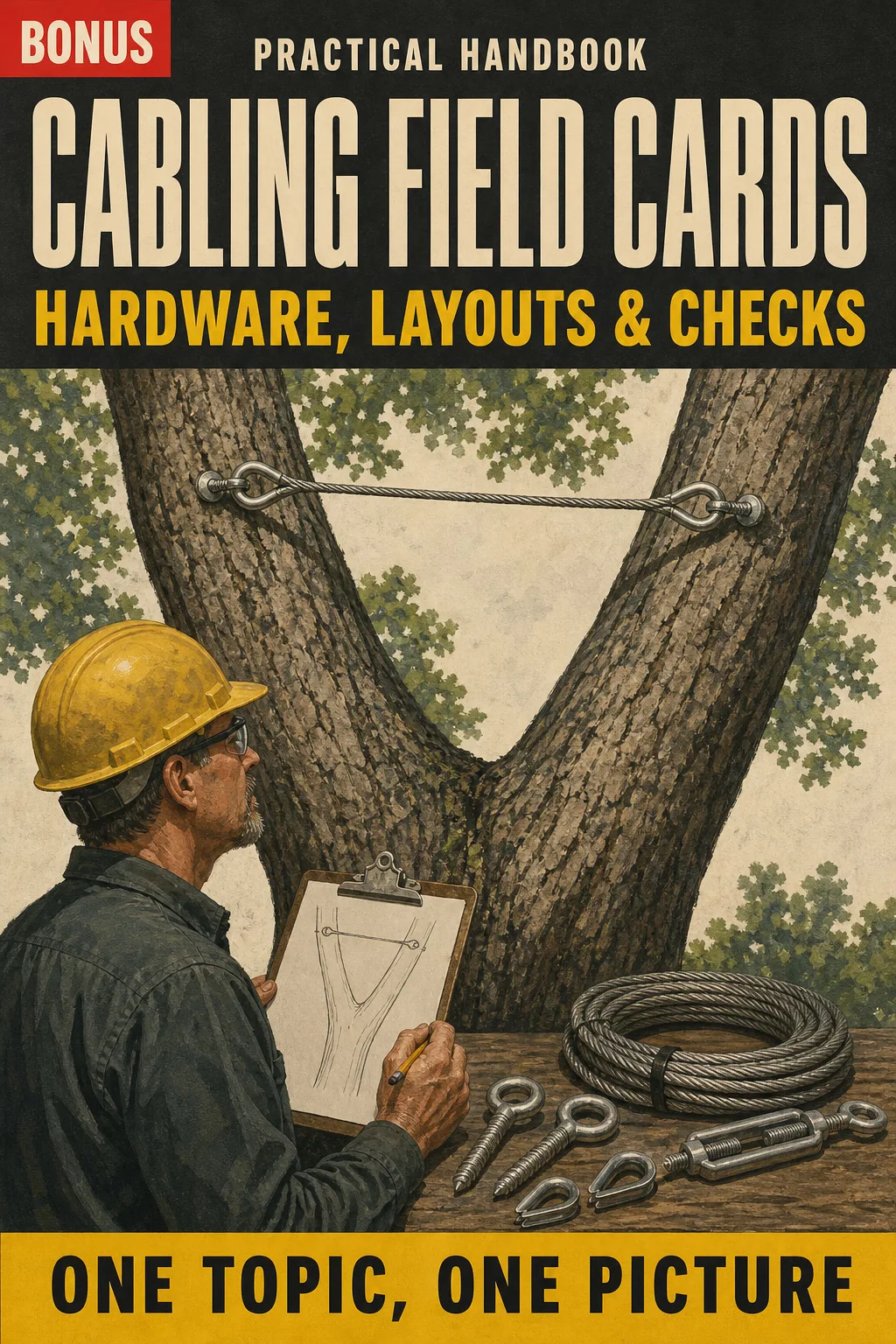
Plus: 2 Free Books

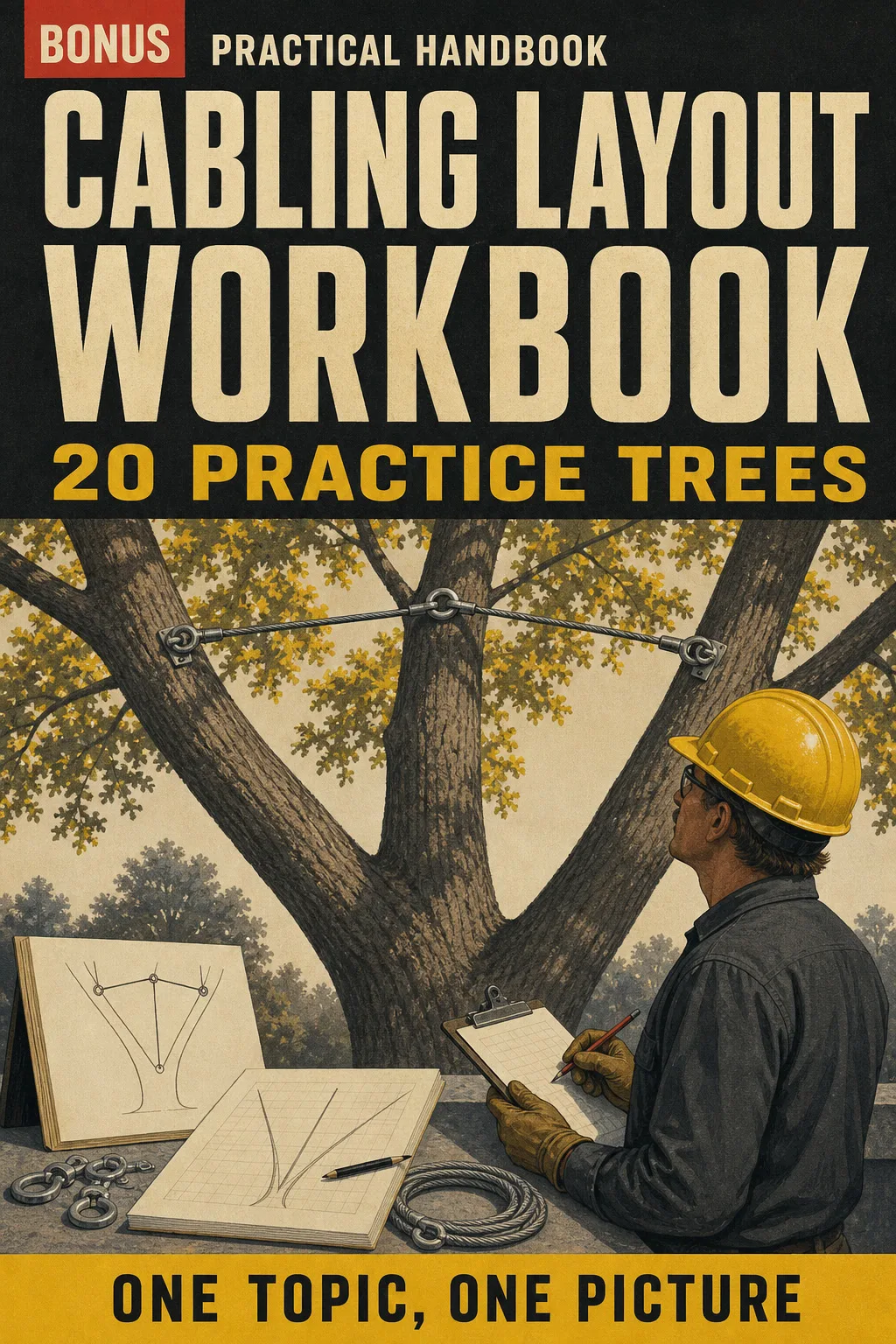
Cabling Layout Workbook: 20 Practice Trees

BONUS 1: «Cabling Layout Workbook: 20 Practice Trees»

Value on its own: US$ 17.90

Practice on 20 drawn trees: read the union, choose the system, set the anchor height and check your answer on the next page.

Cabling Field Cards: Hardware, Layouts & Checks

BONUS 2: «Cabling Field Cards: Hardware, Layouts & Checks»

Value on its own: US$ 14.90

The key drawings on pocket cards you can print and keep in the truck, so you review the layout before you climb.

Tree Cabling & Bracing Illustrated with 2 Free Books

  • Tree Cabling & Bracing Illustrated: 62 illustrated pagesUS$ 63
  • BONUS 1: Cabling Layout Workbook: 20 Practice TreesUS$ 17.90
  • BONUS 2: Cabling Field Cards: Hardware, Layouts & ChecksUS$ 14.90
  • High-resolution PDF to printIncluded
Total value US$ 95.80
YOUR PRICE:
US$ 27
You save US$ 68.80
YES, I WANT TREE CABLING & BRACING ILLUSTRATED FOR US$ 27

📄 This is a digital PDF book sent to your email: nothing is printed or shipped.

Secure purchaseEncrypted payment30-day guarantee

PDF by email: We email you Tree Cabling & Bracing Illustrated as a PDF, together with the two free books. It's a single payment: no installments, no extra charges.

Who This Book Is For

You mostly prune and remove

You mostly prune and remove

Cabling comes up a few times a season. The book gives you the whole method in order, so you don't start from zero every time.

A cabling job is on the schedule

A cabling job is on the schedule

Check the layout, the anchor height and the hardware the night before, then print the field cards and keep them in the truck.

You run a crew

You run a crew

One drawn method for everyone: the same 7 steps, the same hardware names and the same job sheet, whoever climbs.

Everything You Get Today

US$ 95.80US$ 27
YES, I WANT TREE CABLING & BRACING ILLUSTRATED FOR US$ 27

📄 This is a digital PDF book sent to your email: nothing is printed or shipped.

30DAYS
GUARANTEE

30-Day Guarantee

Try Tree Cabling & Bracing Illustrated for 30 days, bonus books included.

We refund everything if the file won't open, if the book isn't what you see here, if you were charged twice or if the email doesn't arrive. Just email us.

You pay once. No subscriptions.

Frequently Asked Questions

Is it for me if I've been in tree work for years?

Yes. It isn't a beginner book. It doesn't cable your tree for you: it gives you the same order to read any tree (walk-around, union, sound wood, target) and the options with what tips the call toward each one. Two worked examples, a codominant oak and a multi-stem maple, show it on real trees. The call on site is still yours, and your crew follows the same steps.

Where does the content come from?

Every topic is checked against the current edition of the US tree care standard for supplemental support systems (ANSI A300), its best-practice guide and the ANSI Z133 safety standard. The hardware is the kind US tree care suppliers carry (through-bolts, lags, eye bolts and eye nuts, EHS strand, dead-end grips, dynamic kits), with no brands. Measurements are in feet and inches. No standard text is reproduced: everything is explained with our own drawings.

Is this official material?

No. It's an independent illustrated reference. It isn't issued, approved or endorsed by any standards body or association.

Does it replace training?

No. Tree work at height is dangerous. The book doesn't replace hands-on training, protective equipment, safety rules or an on-site assessment by a qualified professional.

Does it come with a certificate or continuing-education credits?

No. It's a reference to study and to check on the job. It doesn't give a certificate or CEUs, and the 20 practice trees and the self-check questions are written for this book.

When and how do I get it?

As a PDF by email, sent to the address you enter at checkout.

Do I have to pay every month?

No. It's a one-time payment.

Can I have it on paper?

Yes. Print it at home or at a print shop, and keep the field cards in the truck.

How does the refund work?

You have 30 days. We refund everything if the file won't open, if the book isn't what you see on this page, if you were charged twice or if the email doesn't arrive: just email us.

Before You Close This Page

No more rereading the standard and losing it by the next job.

The two-thirds rule, the layouts and the hardware: you see them drawn, and that's it.

You get to the tree knowing where everything goes.

Drawings make studying faster.

The book is right below.

One-time payment: US$ 27 · Guarantee: 30 days · PDF by email

YES, I WANT TREE CABLING & BRACING ILLUSTRATED FOR US$ 27

📄 This is a digital PDF book sent to your email: nothing is printed or shipped.